On Friday we held our annual Jellis Craig property event at the Glasshouse, hosted by Alicia Loxley, with some terrific guest speakers including demographer and author, Bernard Salt.
Bernard is a proud proponent of Melbourne.
He is so pro-Melbourne, in fact, that he challenges anyone to find such a prosperous, liveable, world-class city with as large a population and potential for future growth as Melbourne, anywhere else in the world.
According to his presentation, Melbourne’s strong population growth will continue to drive demand for housing in the decades ahead.
Bernard explained how our strong exports have driven prosperity, particularly since the 1990s. (Australia is currently the 10th richest country in the world by GPD per capita).
When you combine this with our historically low unemployment, Melbourne has very robust fundamentals for long term growth (in house prices).
The short-term picture for Melbourne’s property market looks less robust, with cost-of-living pressures, sticky inflation, high construction costs, and lower levels of foreign and local investment creating a somewhat subdued market compared to most other Australian states, which have seen far stronger growth since COVID.
Developers have been hit hard, with projects no longer stacking up and being shelved left, right and centre.
Land has retained its value, so developments sites effectively cost the same, but construction costs have ballooned 40 – 60 percent since pre COVID, while the sale price of apartments has barely increased.
Therefore, the supply of new developments coming to market, particularly medium and high-density apartments, which the city desperately needs to meet our burgeoning population, has fallen off a cliff in recent years. And still, sales are lacklustre in that space.
Yet at some point in the near future, the tide will change… It must.
The imbalance of supply and demand will reach a tipping point, with prices of new apartments eventually catching up to the higher construction costs, and should reach a new normal, meaning that new developments will become viable again.
Developers (and builders) will just have to endure the pain in the short term until we reach that tipping point.
In terms of established dwellings, it’s abundantly clear that if the population projections are correct, with 8,000,000 people living in Melbourne by 2050, the premium for inner city land will likely skyrocket in the coming decades.
The economies of having two (elderly) people occupying a 650sqm parcel of land 8km from the CBD will become untenable, except for the richest minority.
The obvious solution is that, over the next two decades, there will be a tremendous transfer of (property) wealth from Baby Boomers to their Millennial children, who, let’s face it, mostly won’t be able to afford the family home in Stonnington without a serious leg up from the bank of mum and dad.
And where will all these Baby Boomers end up? In medium density, high quality apartment developments close to amenity on the main roads of Stonnington.
The oldest Baby Boomers are 78 years old in 2024, so we are only just beginning to see this trend play out.
Salt suggests that in the next seven years, “a Boomer tsunami will trigger the transfer of premium property to GenNext”.
The biggest take away from Friday’s event was this – while the market faces some short-term challenges, the long term fundamentals for Melbourne’s property market are rock solid and demand for quality inner city real estate (especially low and medium density), will only grow over time.
So get in now while you still can?
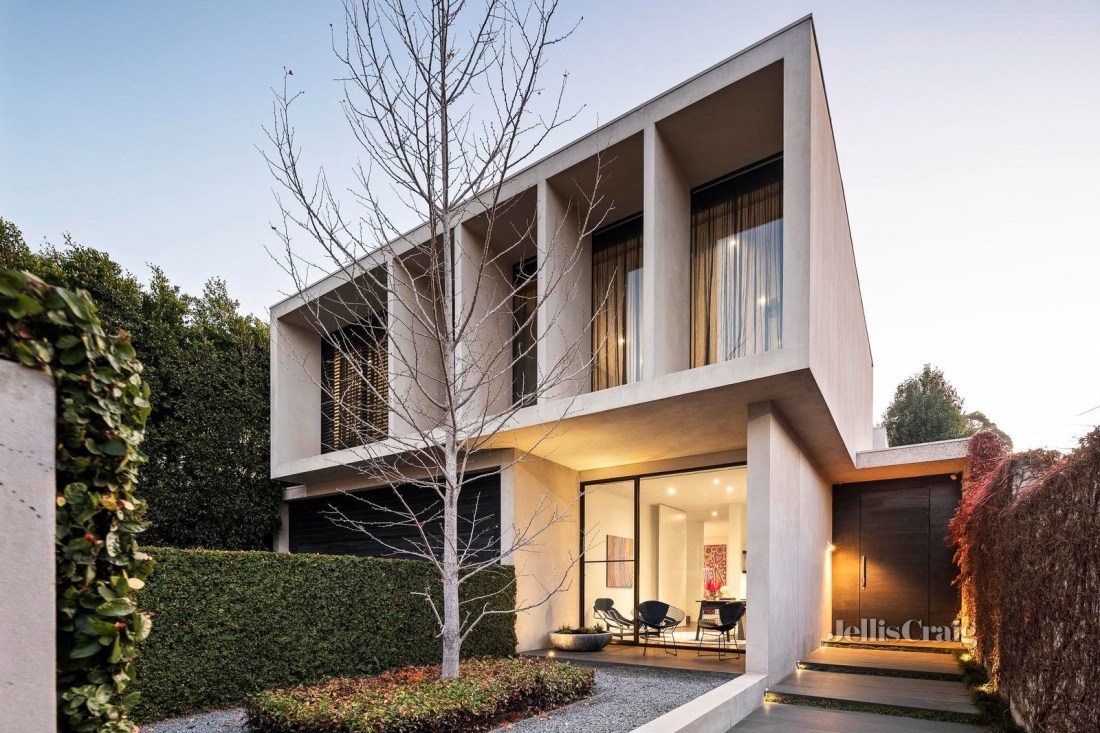
Feature Property: 1b Spring Road, Malvern.


